Ask an HVAC Expert: What Tools Should a Technician Use Before Recommending a Repair? in Etobicoke
Learn what professional HVAC diagnostic tools can confirm before a repair is recommended, from airflow and electrical readings to combustion safety checks.
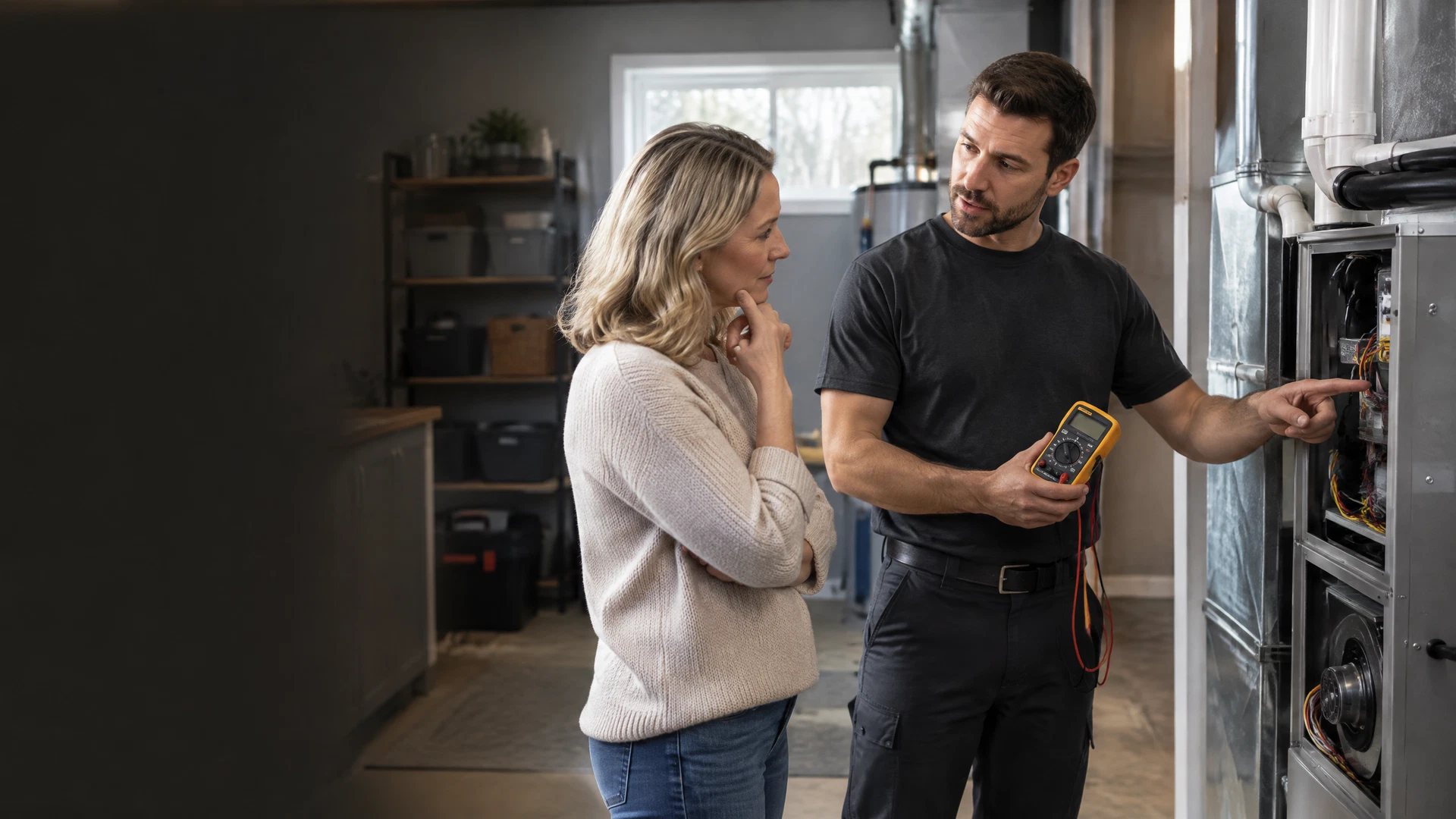
What a Real HVAC Diagnosis Should Produce
Quick Summary:
A real HVAC diagnosis tells you the exact problem, why it happened, and your options. It's not just a guess and a quote. Good diagnostic work uses proper tools. It confirms an issue before any part gets replaced. If a technician can't explain the cause clearly, that's a red flag. Honestly, it is.
A good diagnosis isn't a feeling. It's conclusions backed by numbers, readings, and clear explanations. We've walked into homes across Etobicoke. Homeowners were told they needed a new part. Nobody explained why the old one failed. That's not a diagnosis. That's a guess with a price tag.
So what should you get from a proper visit? Think of it like a doctor. You want to know what's causing the symptom first. Not just a prescription.
Here's a real example. A furnace in a semi-detached home near Sherway kept short-cycling every few minutes. A rushed tech might blame the thermostat. They'd just swap it out. But a proper diagnosis checks flame sensor readings, airflow, and the limit switch first. The actual cause? A clogged filter choking airflow, tripping the high-limit switch. The thermostat had nothing to do with it. Swapping it would've cost the homeowner money and solved nothing. Honestly, we see this all the time.
And this is where tools matter. Without a manometer or amp clamp, a technician is left relying on sound and guesswork. That's it.
We see this mistake all the time. Someone gets a part swapped. The noise stops for a week. Then it's back. That cycle usually means the original diagnosis skipped a step. Etobicoke homes range from older bungalows with aging ductwork to newer townhomes with tighter mechanical rooms. Airflow and pressure readings can look very different from one house to the next. A diagnosis that doesn't account for your actual home setup isn't giving you the full picture.
Common HVAC Diagnostic Tools and What Each One Proves
A tech's toolbox tells you a lot about how they work. Some show up with a screwdriver and a guess. Others show up ready to test. We carry a full set of tools on every Etobicoke call because guessing costs homeowners money. And it costs trust too.
Here's the thing - most furnace and AC problems have more than one possible cause. A weak airflow issue could be a dirty filter. Or a failing blower motor. It could even be a duct that's just too small. The right tool narrows that list fast.
An amp clamp meter matters too. It measures how much current a motor is drawing while it's running. A blower motor pulling too many amps is often close to failing. Even if it still spins fine today. This is the kind of thing you can't catch just by listening or looking.
We had a call last winter. A homeowner in a townhouse near Sherway Gardens was told they needed a new furnace. One test with a manometer told a different story.
The real issue was a blocked flue restricting airflow. A $200 fix instead of a full replacement. That's the value of testing before recommending.
Older homes around Etobicoke, especially those built in the 1960s and 70s, often have duct systems that were never sized right in the first place. Static pressure readings catch that kind of design flaw. No visual check ever will.
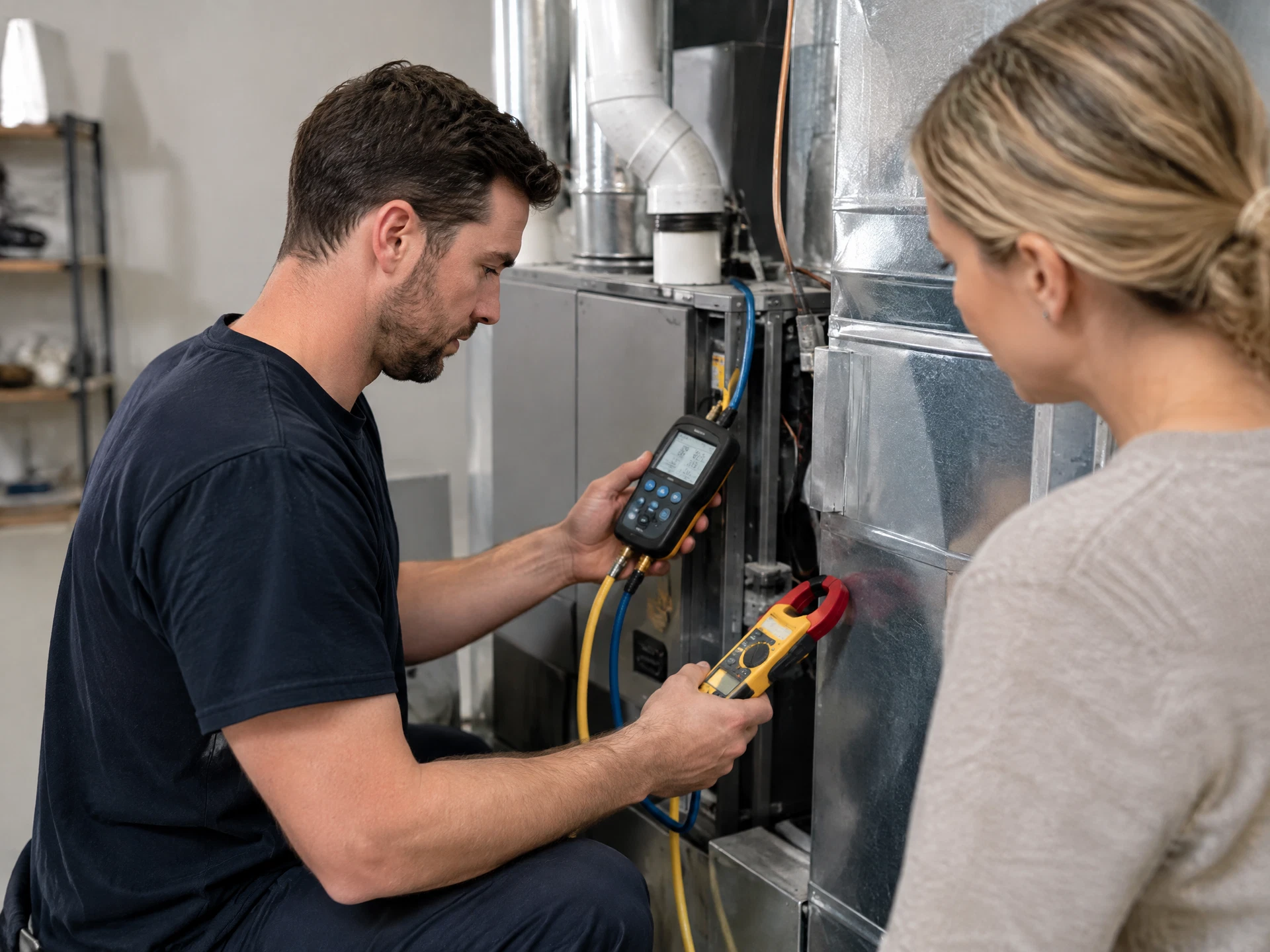
Questions That Reveal Whether a Diagnosis Was Done Right
So how do you know if a diagnosis was actually done? And not just guessed at? Ask a few direct questions. A tech who did real testing will have real answers. One who skipped steps will get vague fast.
We tell every Etobicoke homeowner the same thing: don't be shy about asking. Good technicians expect it. They welcome it, because it shows you care about getting the repair right the first time.
That last question matters more than people think. We've walked into homes near Long Branch. A part had been replaced twice already. The real issue was a duct restriction nobody measured. The parts weren't wrong. The diagnosis was.
Here's a quick real-world example. A homeowner in the Six Points area called about a furnace short-cycling. The previous visit swapped a flame sensor. No improvement. Our tech ran a static pressure test. They found a collapsed return duct behind drywall. Different tool, different answer, different fix. By the way, this happens more than you'd think.
A vague answer isn't always a red flag on its own. Sometimes a tech just needs to slow down. They need to explain better. But if you ask twice and still get nothing solid, that's worth noting.
Trust your gut here too. If a diagnosis feels rushed, it probably was.
One more thing worth asking: has this reading been documented anywhere? A written or photographed reading protects you. Especially if the same problem shows up again next winter. It also gives the next technician - even a different one - something real to compare against. Instead of starting from zero.
Frequently Asked Questions
Common questions about Ask an HVAC Expert: What Tools Should a Technician Use Before Recommending a Repair?
How do I know if my HVAC problem needs a professional or if I can check it myself?
Call a professional once you've checked the basics like the thermostat, breaker, and filter. If those look fine and the issue continues, you need someone with proper diagnostic tools. Multimeters, manometers, and combustion analyzers catch problems that a visual check simply can't. Trying to guess beyond that point often leads to swapping the wrong part. If your furnace or AC keeps acting up in Etobicoke, a tested diagnosis saves you time and protects your system from further damage.
What's the biggest mistake homeowners make when getting a repair diagnosis?
The biggest mistake is accepting a part swap without asking what caused the failure in the first place. A part can be replaced and still leave the root issue untouched. This often means the same noise or breakdown returns within weeks. A real diagnosis explains the cause, not just the symptom. Before agreeing to any repair, ask what readings were taken and what tool was used to confirm the problem.
Why do older Etobicoke homes seem to have more HVAC diagnostic issues?
Older Etobicoke homes, especially bungalows from the 1960s and 70s, often have ductwork that was never sized correctly for the system installed. This creates airflow and pressure problems that look different from what you'd see in a newer townhome. A static pressure reading with a manometer catches these design flaws right away. A tech relying only on a visual check will likely miss it. Home age and duct layout both matter when it comes to an accurate diagnosis.
What tools should a technician use before recommending a furnace or AC repair?
A technician should use a multimeter, manometer, amp clamp, and combustion analyzer, depending on the symptom. Each tool confirms a different part of the system, like electrical current, airflow, gas pressure, or combustion safety. Without these readings, a diagnosis is really just a guess.
Can a furnace short-cycling issue really be caused by something other than the thermostat?
Yes, short-cycling is often caused by a clogged filter or restricted airflow, not the thermostat. A rushed technician might swap the thermostat first because it seems like the obvious fix. But proper testing checks flame sensor readings, airflow, and the limit switch before pointing to a cause. We've seen this exact pattern in Etobicoke homes near Sherway, where the real problem was airflow, not electronics.
What questions should I ask to make sure my HVAC diagnosis was done correctly?
Ask what reading the technician got, what tool was used, and whether other causes were ruled out first. A tech who did real testing can show you the number on the screen and explain what it means. If they can't answer clearly, the diagnosis likely skipped a step. This kind of check applies whether you're in an older Etobicoke bungalow or a newer townhome with a tighter mechanical room.